



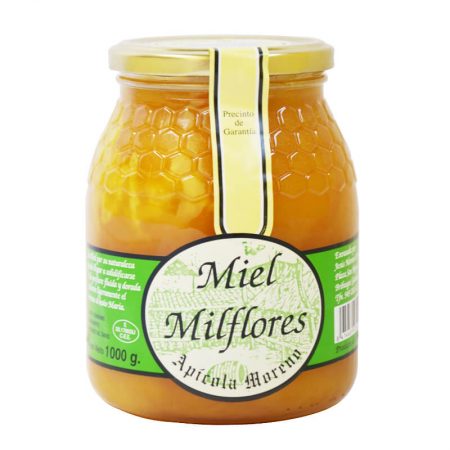
Best selection of organic honeys of Spanish beekeepers committed to the care of the environment.
Index:
|
Summary: Organic honey is top quality honey that is produced according to the production parameters of organic beekeeping. For this reason, it has no agrochemicals and its certification is more exhaustive. Consequently, it is a much purer and higher quality honey. This selection of raw honeys is also available for sale in our shop in Las Rozas de Madrid.
Related articles: We can achieve 100% organic honey. Raw unpasteurised honey.
Firstly, we offer an exceptional range of organic products, including a diverse selection of high-quality organic honeys. Also, our honeys are sourced from dedicated beekeepers who prioritize both quality and environmental responsibility.
However, eating organic is just one part of a healthy lifestyle. To truly enjoy its benefits, it’s important to combine organic food with other healthy habits. Therefore, here are some key recommendations::
Pair organic products with a balanced lifestyle. Eating organic should go hand in hand with a nutritious diet, regular physical activity, and the choice of high-quality ingredients.
Prioritize freshness and nutritional value. Organic products should not only be free of industrial chemicals but also fresh, well-preserved, and rich in nutrients. This ensures we nourish our bodies while minimizing exposure to harmful substances.
View organic as an investment in your health. While organic food can be more expensive, its long-term health benefits are worth the cost. A wholesome diet helps strengthen the immune system and prevent many chronic illnesses.
Support local and sustainable agriculture. Choosing locally produced organic goods promotes rural development and helps sustain small-scale farmers in your community.
In short, the consumption of organic products should go hand in hand with a good lifestyle. In addition, these products should be of the highest quality—and when they’re produced locally, they offer the added advantage of supporting our rural economies.

Photo 1: Mountains of Guadalajara.
Secondly, we offer an exceptional selection of premium organic honeys, sourced directly from Spanish beekeepers who are deeply committed to quality and environmental sustainability. Don’t miss out on this outstanding collection—some of the finest organic honeys Spain has to offer.
Honey is one of the foods that could contain traces of agrochemicals if not produced organically. That’s why choosing organic honey is the safest and most responsible option.
Firstly, there are no chemical or antibiotic products present in organic honey, which may be present in small traces in conventional honeys. Also, organic honeys undergo more stricter regulations and inspections by certified authorities, both nationally and at the European level.
However, more important than whether honey is simply labeled as organic is ensuring it is high-quality and raw—meaning it hasn’t been pasteurized or mixed with additives. Always choose fresh, raw honey from the current season to enjoy its full nutritional and therapeutic properties.
In conclusion, while it is important to choose organic honey to avoid unwanted residues, it is equally essential to ensure that the honey is raw, well-preserved, and as natural as possible.
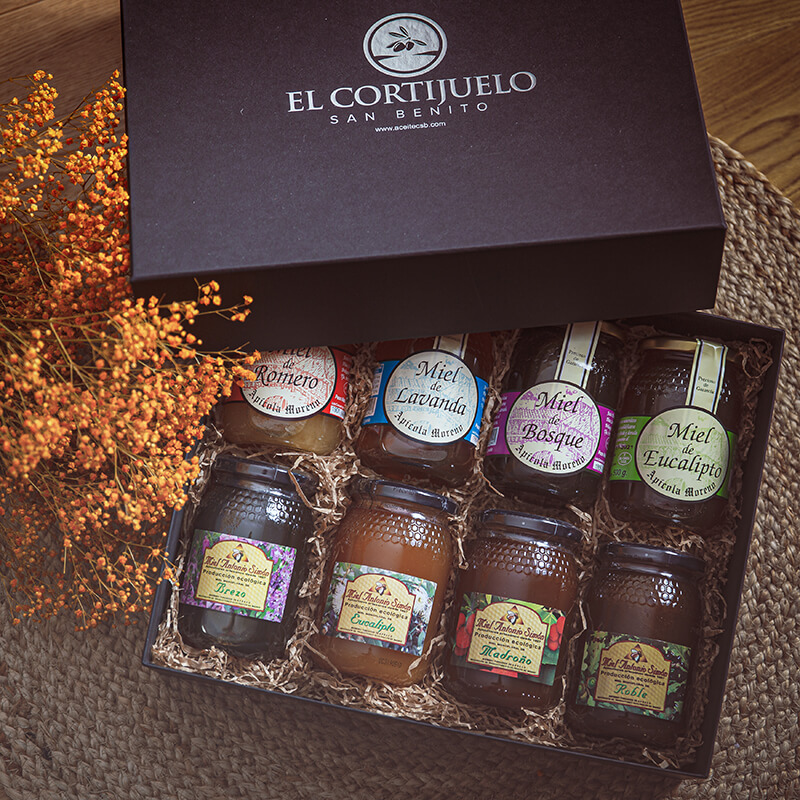
Picture 2: Box with organic and non-organic honeys
The differences between organic and conventional raw honey are analysed from three points of view: taste and aroma, quality and control.
First off, there are no discernible differences between conventional and organic honey in terms of flavor or aroma. The flavor and aroma are unrelated to the fact that it is organic.
Second, both conventional and organic honey would have the same quality if they were produced by socially responsible beekeepers who do not manipulate their honey.
Finally, organic honey is superior to conventional honey when considering control. The state organization enforces far stricter regulations on organic honey. At short notice, organic hives are visited and inspected, and the batches of honey are meticulously examined.
We currently have also a wide variety of organic honeys. Among them, we can find the following: Orange blossom, heather, lavender, lavender, strawberry tree, thousand flowers, rosemary and thyme.
In addition to these, we are gradually incorporating others. However, if we do not have them on the website, you can contact us to see if we have them in the physical shop. And if we don’t have them, we can look for them in our suppliers.
In addition, honey, as a product that is obtained without harming any living being, is a true gift that nature gives us.
Furthermore, all our beekeepers from whom we buy organic honey create employment and wealth in rural areas.
To summarize, the characteristics of an organic raw honey are as follows:
Organic farming and the production of organic honey has also clear benefits according to new research by Dr. Wintermantel:
All our honeys that we offer in our business have been obtained by small beekeepers from Spain and Europe. We have chosen all our beekeepers because they are great lovers of nature and beekeeping.
We can assure this, since we have visited all the beekeepers. We can therefore ensure the quality of our honey. However, organic honey is subject to higher and more stringent quality controls.
In conventional honeys we have a much wider range. However, in organic honey we can offer you the following beekeepers:
This beekeeper is located in the province of Madrid. He has at his disposal honey from heather, cantueso, chestnut, eucalyptus arbutus, multifloral, oak, rosemary and thyme.
Antonio Simón’s honey is also one of the most awarded at a national level. Among the most important awards, we can highlight:
These are some of the prizes he has won in recent years.
Moreover, it is a corporate video of Antonio Simón
Video 1: Honeys of Antonio Simón
Beekeeper located in the province of Cadiz and has placed all its bees in the Natural Park of Sierra de Grazalema and in the Natural Park of Alcornocales. He offers us the honeys of orange blossom, heather, strawberry tree, oak and thyme.
Finally, if you are an ecological beekeeper and can offer us something different and of quality, please contact us to add your honeys.
Rancho Cortesano Honey Awards and Stamps
Ranch Cortesano honey has the following quality seals:
It is also a winner of prestigious grand prizes, such as:
Next we show you a video about this cooperative
Video 2: Honesys of Rancho Cortesano
The properties of organic honeys will be the same as conventional honeys. However, traces of insecticides and other agrochemicals should be non-existent.
Also, when we talk about properties, we are talking about a popular wisdom and demonstrated by the experience of generations. Because the properties of a product can only be demonstrated by a pharmaceutical company, and honey is not a medicine.
Honey is a natural product that due to its characteristics of its composition and its components, will provide our health a series of benefits. Benefits that have today are widely used when people have throat infections and other discomforts.
Also, people who know this product also use this fantastic natural product in the making of creams. Like pharmaceutical companies promoting their products for their content of honey, propolis and royal jelly.

Photo 4: Beehives in a holm oak grove
The price of organic honey is always somewhat higher than that of conventional honey, because organic honey is not always as expensive as conventional honey.
Bees are highly endangered and have to be treated continuously, otherwise they die. Bees cannot sustain themselves. Throughout history, we have been selecting bees to form large honeycombs and because the hive is so large, they have very little chance of surviving on their own.
This, together with varroa, a mite that weakens the bees and transmits diseases, means that all hives must be treated. In conventional beekeeping, acaricides and antibiotics are used in doses recommended by specialists. A beekeeper cannot use chemicals on his own bees, they are prescribed the amount of antibiotics and other products that they can give to their bees.
In the case of organic beekeeping, they must use organic products to treat varroa and other diseases. These treatments are less effective and more expensive, increasing bee mortality and labour costs. Another thing about organic honey is its bureaucracy, as it is controlled, more paperwork is required, which is what makes organic honey of a higher quality, more controlled and more expensive.
Organic honeys are becoming easier and easier to find. Another thing is that it is of high quality. Among the places where you can find it, we have the following:
Beekeeper |
Supermarkets |
Specialised shops |
Online Shops |
|
|
|
|
|
|
|
|
| Good option | No recommended | Recommended | Get informed |
Table 1: Different options for buying quality raw organic honey.
In short, we have a wide range of places to buy quality honey.

Photo 5: Beekeeper of Apícola Moreno’s honeys
Finally, we leave you the questions that you usually ask us:
Honey is the only or one of the few foods that nature gives us without the death of any living creature. Both the extraction of organic and conventional honey does not kill any bees, and in both cases no harm is done to the bees. Therefore, a gift of nature.
Honey does not need to be kept in the refrigerator. I recommend keeping it in a cool, dark place, that’s enough.
This is a decision that depends on the individual. Some people think it is and others think it is not. Also, its taste and texture characteristics are the same as those of conventional honey. However, there is more governmental control on traceability in organic honey.
What we ensure is that our honey is truly organic and of the highest quality. To do this, we visit our beekeepers, their apiaries, extraction and packaging rooms. We also ask for their organic certificates.
In short, mostly Spanish honeys with more governmental control. In addition, we will gradually add more varieties of organic honeys.