

Selection of fantastic acacia honeys from local beekeepers from Europe.
Index:
|
Summary: Acacia honey is a unique honey with a medium sweet and pleasant aroma of vainilla and almond. Moreover, it has a beautiful light color and takes a long time to crystallise. It also stands out for its beneficial properties and it is the least allergenic of all other honey. In addition, this honey is available for sell in our shop in Las Rozas de Madrid.
Other interesting articles: Raw unpasteurised honey.
Firstly, keep reading to find out about acacia honey:
With a delicate light amber hue when runny, this honey transforms into a smooth, creamy white when crystallized.
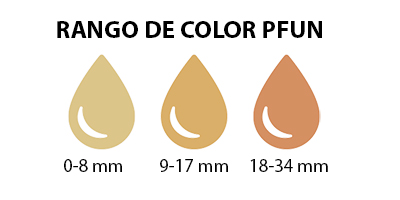
Photo 1: Colour range of acacia honey.
This honey offers a very sweet and mild flavor on the palate, with a pleasantly neutral profile. Subtle aromatic notes of vanilla and almond can also be detected — distinctive characteristics of this unique honey.
The tree of Acacia, the “robinia pseudoancia” in its scientific name, reaches between 15 and 25 meters high and is found in many countries. In Europe we find large plantations in Romania, Bulgaria, Hungary and Ukraine.
Video 1: acacia flowers
Acacia blooms throughout the year, but its peak flowering occurs in May and June. As a result, acacia honey is typically one of the first to be harvested during the season.
The predominant pollen found in this honey comes from the acacia tree (Robinia pseudoacacia). In addition, smaller amounts of pollen from other meadow plants — particularly from the Fabaceae, Asteraceae, and some Lamiaceae species — may also be present.
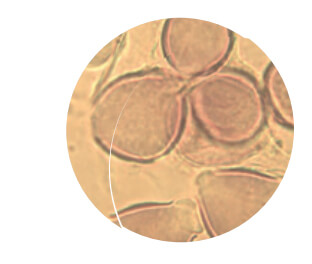
Photo 2: Acacia pollen under the microscope
Acacia honey has a low sucrose content and a high proportion of fructose compared to glucose. This composition results in very slow crystallisation. It can remain in a liquid state for years, although the rate of crystallisation may vary depending on storage temperature.
Our honey is produced using environmentally sustainable practices. We collaborate with small-scale beekeepers who are committed to maintaining high-quality standards while supporting the local economy.
Some research suggests that the regular consumption of raw honey may offer a range of health benefits. These properties are backed not only by scientific studies, but also by traditional knowledge passed down through generations of beekeepers and popular wisdom.
In the case of acacia honey, its health benefits are supported by a 2016 scientific article published in the journal Frontiers in Bioscience, authored by researchers from a Nigerian university. According to the study, acacia honey may provide the following properties:
In conclusion, acacia honey is a fantasti sweeten for so many different dishes, and its consumption helps to imrpove our health.
Acacia honey crystallizes very slowly, making it especially popular among children for its smooth texture and mild flavor. It spreads easily on toast and biscuits, making it a perfect choice for everyday breakfasts and snacks.
Moreover, renowned chefs recommend using this honey in salad dressings — particularly those paired with goat cheese or smoked ingredients — where its delicate sweetness balances savory flavors beautifully.
Acacia honey crystallizes very slowly and forms extremely fine-grained crystals. Even without pasteurization, it typically remains in a liquid state for a long time.
Shelf life refers to the period during which honey maintains its optimal properties. After approximately two years, levels of HMF (Hydroxymethylfurfural) may exceed 40 mg/kg, which could indicate a decline in quality.
This honey is not recommended for children under 2 years of age, in accordance with general health guidelines regarding raw honey consumption in infants.
In Spain there are no important plantations to obtain honey from Acacia, so everything comes from east Europe. However, we obtain this honey from the following beekeepers:
Apicultor |
Ubicación |
Características |
| Como Una Reina | Import | No organic |
| Sala Higón | Import | No organic |
| Antonio Simón | Import | Organic |
Tabla 1: Our beekeepers
In short, our importers are serious people who only import high-quality honey. They work with well-known wholesalers, and the honey has been analyzed before it is imported. Consequently, we offer for sale only raw honey with no adultaration and no added sugars.
The large plantations of acacia in Europe come mainly from Romania. But in other European countries there are also Croatia and Poland.
Also, this honey can be easily found in Lidl and Mercadona. However, the acacia honey that we bring, unlike the latter, is of higher quality. However, large supermarkets usually offerprocessed and pasteurized honey.
In addition, we show you a chemical analysis of Antonio Simon’s ecologic acacia honey carried out in 2019. We try to update all this information.
Limit parameters that can have the organic acacia honey of Antonio Simón
Chemical parameters |
||
| Colour (mm Pfund) Maximum 35 | Humidity (%). Maximum 18 | Fructose + glucose: Minimum 60 |
| Sucrose: Maximum 10 | Electrical conductivity (mS/cm): minimum 0.3 | Free acidity (meq/kg): Maximum 50 |
| HMF (mg/Kg = ppm): Maximum 40 | Diastasas (Schade Units): Minimum: 8 | Special parameters (index F/G): Minimum 1.5 |
Tabla 2: características químicas de la miel de Antonio Simón