

The finest selection of raw honeys, propolis and pollen, mainly from Spanish local beekeepers all over Spain.
Index:
|
Summary: For millennia, humans have been consuming raw honey, which is an amazing food source. Moreover, it has a high vitamin content and other nutrients that are very beneficial to health. We also have an amazing assortment of premium honeys from regional beekeepers throughout Spain in our Las Rozas de Madrid store. eucalyptus, lavender, rosemary, thyme, etc.
Related studies: Where to buy raw bee honey–Unpasteurized raw honey-The best designations of origin for honey-The most expensive honeys in the world.
Firstly, we show you the most important information about our raw and pure honey:
All the honey we offer in our shop is raw honey, meaning it has not been filtered or pasteurized. Therefore, real honey that preserves all the natural enzimes, pollen and floral essence.
The color and taste of honey depend on the plants that bees have visited. Consequently, the color of honey can vary from very light almost white colours to dark and even to black color. Furthermore, many of them take amber colour with reddish, grayish or greenish reflections. However, these color variations are mainly due to suspended particles like pollen and minerals.
Additionally, we present a table showing the different colors you can find in genuine honey.

Photo 1: Colour grading of honey
In addition, we have visited each of our beekeepers’ apiaries, packing rooms, and sustainable beekeeping practices to make sure they adhere to ethical and sustainable beekeeping standards. We have also examined their certificates, particularly those related to organic beekeeping. Similarly, all the honey has passed all spanish state controls laws.
We offer both organic certified and conventional honey of high-quality.
Do not feed honey to infants under two years old. Also, people suffering from diabetes should also be careful and ask a doctor.
Moreover, honey is one of the few foods that nature gives us, where no living being suffers.
When we visit the apiaries and meet the beekeepers, wemake sure that all environment and animal wellfare care have been taken.

Photo 2: Bee poem
In addition, beekeeping play a important rolle in rural areas and in our our natural environment. They are esential for the polinization of crops and labor creation of rural areas.
Pure and raw honey is a natural product that comes from plants through the intermediary of bees. Plants supply food to bees in two ways:
First of all, the bees collect nectar and myelates from plants, keep them in their crop. At the same time , transporting pollen from the flower to flower and carrying out the olinitation.
Also, in the bee’s crop, the raw material is mixed with its saliva, which fluidizes it and enriches it with enzymes, and with biochemical catalysts that participate in the transformation of honey sugars. Then, once the bee has filled its crop, it moves to the hive, in order to empty the contents in the rest of the beehive.
Video 1: Honey production
Then, once the pecorator bees bring it to the hive, they pass the nectar to their sister bees one to another. In the same way, this nectar or honeydew is passed from one to the other. Therefore, it goes from stomach to stomach in order to enrich it, lower its content in water and transform it into honey.
Finally, bees put this nectar which could already be honey in the cells of the hive. Here, its water content decreases even more in contact with outside temperture. After, when it reaches a sugar concentration between 70 and 80%, bees make to seal off this honey in each cell. In this moment honey is the ready for harvesting. Approximately when 80% of the cells are sealed off, the honey is at its optimum moment.
Some beekeepers, in order to obtain higher yields, harvest honey from before is ready. In other words, this honey is not made yet and has a higher water content. These practices can ferment the honey due to its high water concentration. In addition, this is honey with more water that it should have, a honey of lower quality.
In another hand, we work with beekeepers which are commited with the quality. Also, our beekeepers are involved in every steps, from managing the hives, to bottling the honey. Consequently, garanting the best qualitythey make sure that we offer the finest raw honey.
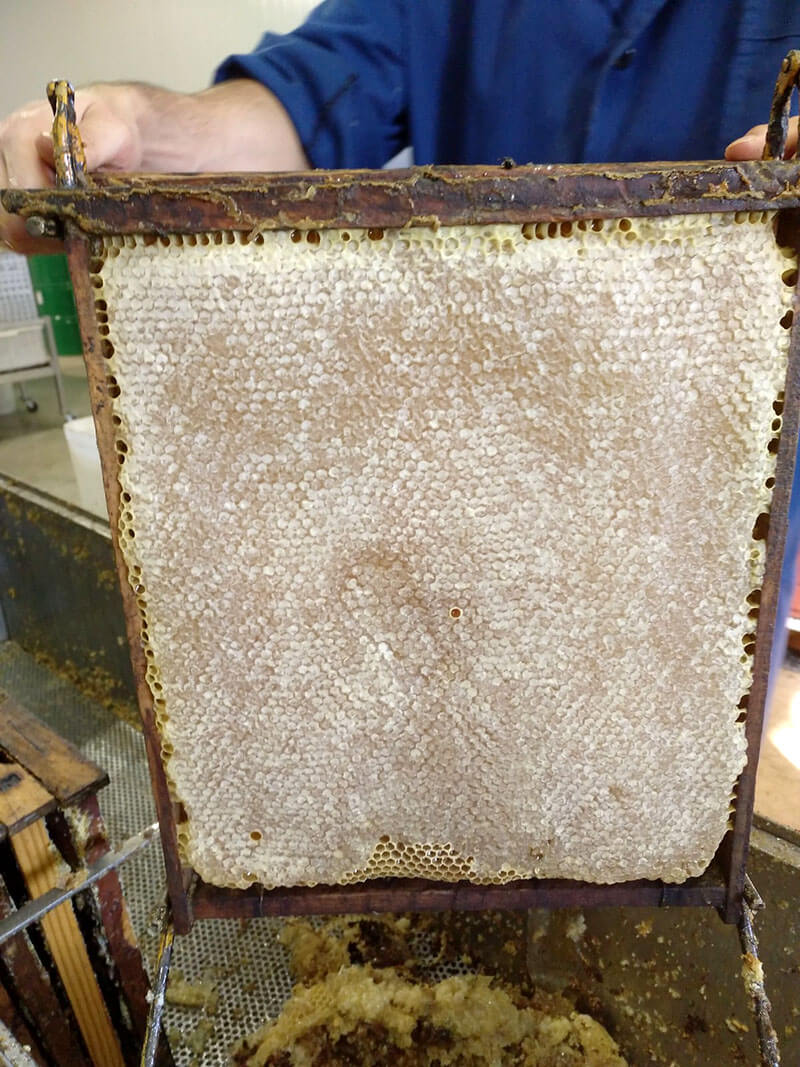
Photo 3: Unoperated honeycomb
Flowers provide bees with food, but they receive polinitation in return, so they make a symbiotic relationship. When the bees collect nectar from the flowers, the bees soak up pollen. When the bee visits another flower, it spreads the pollen on other flowers and fertilizes them. In this way, the plant gives food to the bee, but it has to spend less energy to produce large amounts of pollen as anemophilous plants do, which transport their pollen with the wind.
How to differentiate a high-quality honey with a low quality or adulterated honey. The answer is easy when adulteration is very clear, but it is not so easy, when the adulteration is more sophisticated. In general, when we buy a raw honey, we have to take into account the following points
In another words, these would be 5 basic points to ensure that the honey you buy is a high-quality raw honey. However, you can find more information in our article “Raw unpasteurized honey”.
A common question among us is whether conventional and organic honey differs from one another. There is no difference in terms of appearance or flavor, but there is a difference in terms of production features and quality assurance.
Organic honey is honey with a organic certificate. To get this certificate, beehives must follow a stricter guidelines of ecologial beekeeping. For example, they should bring his hives to organic fields and use only organic treatments. Consequently, organic beekeeping must comply with more stricter environmental requirements and controls than conventional honey.
In summary, the differences between organic and conventional honey are how beekeepers work and the honey bees are kept.
Furthermore, it must be taken into account that bees cannot survive without human control. The diseases they suffer will eventually kill the entire hive if left untreated. Therefore, a hive must always be treated even in remote places.
Organic or ecological honey uses only organic products, such as thymol in the care of its bees. Conventional honey, on the other hand, may use chemical or pharmaceutical products, although all chemical products are controlled by a veterinarian.
Commercial honey |
Raw honey |
Organic honey |
|
|
|
Table 1: Differences between the different types of honey.
Honey is composed primarly of glucose and fructose, but also contains other components. However, this composition varies, depending on several factors. Factors that we will see below:
In general, the honeys coming from myelates (heather, forest, holm oak, oak…) are darker honeys than the light honeys, which come from the nectar of the flowers (orange blossom honey, rosemary, thyme, eucalyptus…). Likewise, dark honeys have a high concentration of minerals. On the other hand, light honeys are richer in nectar and antioxidants.
Specifying a little more, in honey we find the following nutrients:
Firstly, the composition of honey can be divided into two groups, the main element, sugar that sccountd for 95 to 99% of honey dry matter. Also, it contains many other components.
On average, the major components are as follows:
Component |
Percentage (%) |
| Water | 17 |
| Glucose | 31 |
| Levulose | 38 |
| Maltose | 7.5 |
| Sucrose | 7.5 |
| Other sugars |
Table 2: Primarly components of honey.
Quality honeys are usually 17% water, although the legal limit is 21%. Likewise, in the case of the calluna (heather) honey, its humidity usually reaches 23%.
On the other hand, the set of sugars constitutes between 95 and 99% of all dry matter.
Minor components: organic acids, amino acids and proteins, enzymes (glucose invertase, glucose oxidase, amylases α and β from bee saliva, large amount of water-soluble vitamins, carotenoid pigments (red), flavonoids (yellow) and minerals.
First of all, honey is a completely natural product with enormous medicinal and healthy properties. Therefore, a food that everyone should take daily.
Among the most important properties, we can name the following:
In addition to many other properties that are known by traditional wisdom, but that science has not yet demonstrated.
In other hands, finding pure honey on the market isn’t that easy. Especially if you’re looking for it in supermarkets where most of honey sold is pasteurized honey.
Therefore, in our shop located in Las Rozas de Madrid, you can find also a fantastic selection of pure and raw honey from Spain and Europe. They all come from serious and honest local beekeepers. As a result, we offer only real honey.
Type |
Advantages |
Disadvantages |
Recommendation |
| Supermarket |
|
|
|
| Gourmet shop |
|
|
|
| Specialized stores |
|
|
|
| Beekeeper |
|
|
|
| Online |
|
|
|
Table 3: Different options to buy quality honey.
* We have to inform who to buy from, because on the internet it sells low as high quality.
We have selected beekeepers who are committed to quality, respectful and sustainable beekeeping practices. We only only offer high-quality honey, so everything in our store is real raw honey. In summary, we work with the following beekeepers:
Antonio Simón |
Apícola Moreno |
Como una Reina |
Obreras de Aliste |
| Phone number: 91 620 90 47 E-Mail:
correo@miel-antoniosimon.com Webpage: miel-antoniosimon.com/ |
Phone number: 949 28 10 21 | Phone number: 962 260 384 Webpage: www.comounareina.com | Phone number: 619 94 55 94 Webpage: www.lasobrerasdealiste.es
E-mail: info@lasobrerasdealiste.es |
 |
 |
 |
|
| Madrid | Guadalaja, no Do La Alcarria | Valencia | Zamora |
Table 4: Beekeepers we work with.
More companies we work with.
Rancho Cortesano |
Rika |
Valderromero |
Sala-Higón |
| Phone number: 956 23 75 28 E-Mail:
miel@eanchocortesano.net Webpage: www.ranchocortesano.net |
Phone number: 622 437 753
Web page: www.rikamiel.com E-mail: rika@rikamiel.com |
Phone number: 962 260 384 Webpage: www.comounareina.com | Phone number: 962 52 74 27 Webpage: latiendadelamiel.com
E-mail: info@lasobrerasdealiste.es |
 |
 |
 |
 |
| Cádiz | Tenerife | La Alcarria, Guadalajara | Valencia |
Table 5: Beekeepers we work with.
All our beekeepers handles all steps from harvest to bottling
In Spain there are also thousands of beekeepers spread all over the country. We have selected these, and in the future we will add some more. This does not detract from the fact that you can also find other quality honeys.
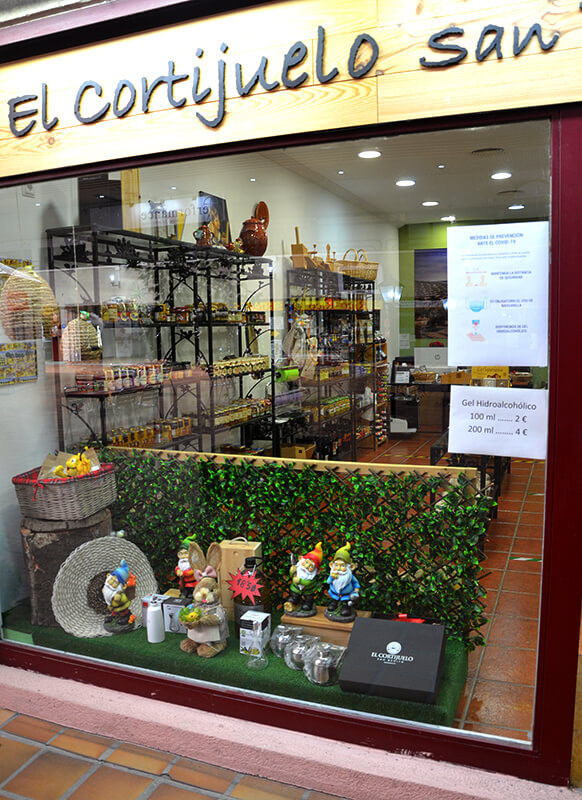
Photo 4: Our shop in Las Rozas de Madrid
In addition, these are frequently asked questions:
Honey is a natural product that contains minerals and vitamins, which are very beneficial to health.
If we want to accelerate the crystallization, we must put the jar at a temperature close to 14 celsius degrees. At other temperatures it is delayed, and in case of high temperatures it liquifies.
Almost all the honeys we sell are Spanish, but there are some from other countries. For instance, we bring honey from Germany, New Zeland, Hungary, Poland, Portugal….
We have visited almost all our beekeepers, their facilities and apiaries in order to ensure the highest quality of the honey we sell. For this reason, we can tell you that we sell real high-quality honey.
It depends on the variety and the time of the year. The dark honeys always arrive liquid, the rest of the honeys are sometimes solidified, with the exception of summer, when the heat makes them almost all liquid.
If honey is heated in an infusion or coffee, it loses some properties, but few. However, the real problem is ti heat honey for long periods of time, as happens with pasteurised honeys.
Any of our honeys have kosher certificate.
The english media BBC