

Video 1: Honey history
The availability to buy honeys on the market is enormous, with options ranging from small local stores to large supermarkets and online retailers. However, finding high-quality raw honey is not an easy task, as adulterated products are unfortunately quite common. That’s why being able to distinguish genuine raw honey is essential if you want to ensure you’re buying a quality product and making healthy choices. Therefore, follow these tips to learn how to identify and where to buy real raw honey..
Also, here we give you answers to many frequently asked questions that you may have when buying honey. Questions such as: Where can we find quality raw honey? How can we distinguish genuine raw honey? Where can we buy it at the best price?
First, let’s take a look at the pros and cons of each type of store when it comes to buying raw honey:
Business |
Advantages |
Desadvantages |
| Supermarket |
|
|
| Gourmet shop |
|
|
| Specialist shops |
|
|
| Beekeeper |
|
|
| Online shops |
|
|
| Flea markets |
|
|
| Others |
|
Table 1: The advantages and disadvantages of each shop.
In addition, we have added a few more characteristics of some of them.
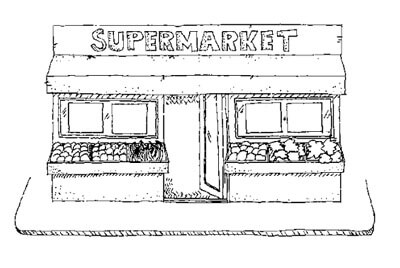
The first option is, probably, supermarkets. In Spain, there are a lot of these stores, like: Mercadona, Carrefour, El Corte Ingles, Lidl, and Aldi. Howevr, they are not the best option to buy high-quality honey, although honey is always available on their shelves. Here are some pointers, and we strongly advise you to be discerning about the honey you purchase, as supermarkets frequently sell heavily processed and blended honey.
Additionally, El Corte Ingles and Carrefour are most likely the stores with the largest selection of honey varieties. But be careful to confirm the authenticity of the product and what you are purchasing if you make a purchase from this site.
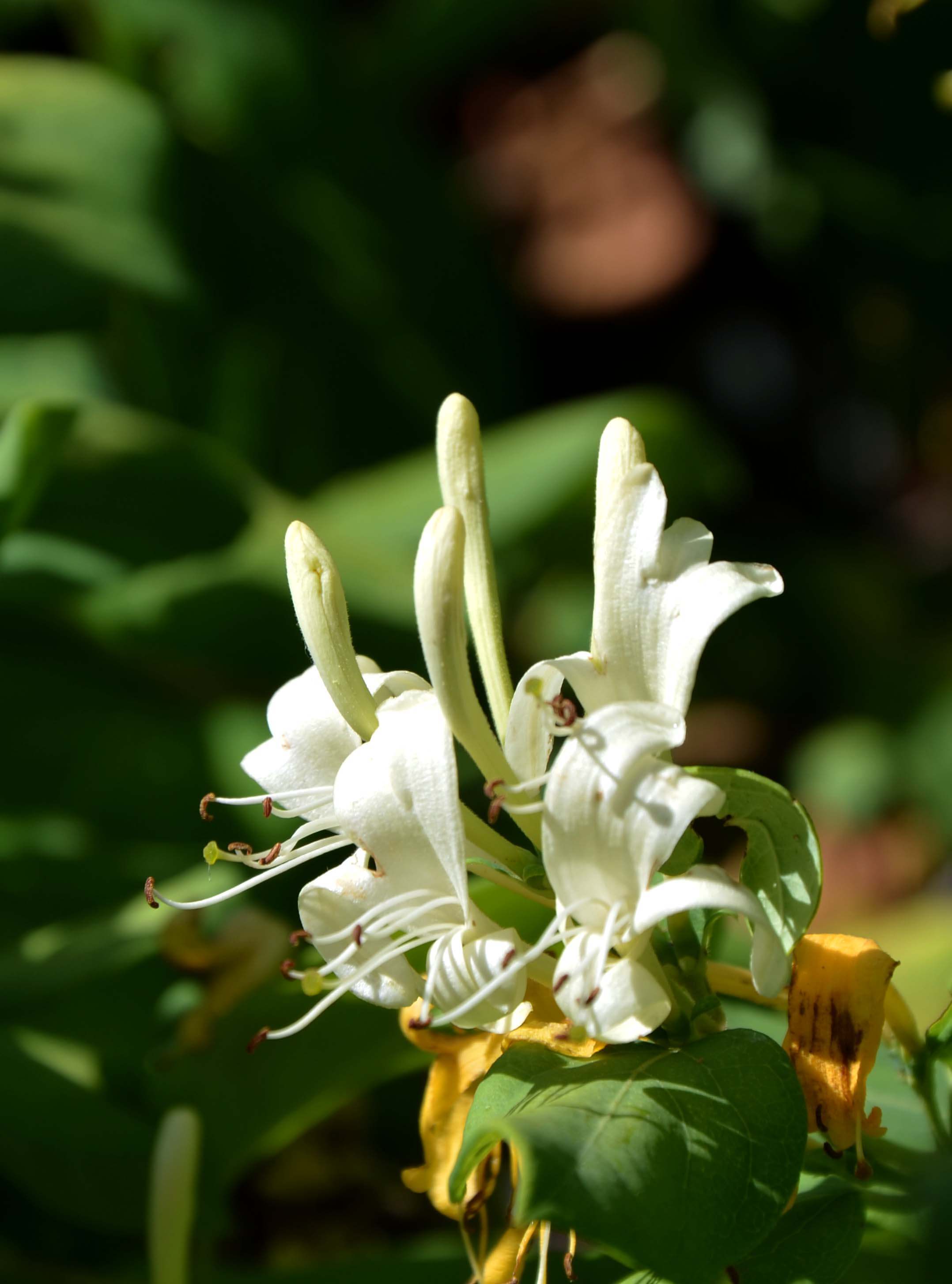
Photo 1: Honeysuckle flowers
Second, there are specialiced honey stores, like the Cortijuelo San Benito store here in Las Rozas de Madrid. We provide a large selection of premium raw honeys at competitive prices. Furthermore, all of our honey come from Spanish beekeepersa and we also collaborate with a small number of trusted producers from France, Germany, Portugal, and New Zealand.
Additionally, these stores like us offer advice to help you in your shopping. Furthermore, in order to guarantee the quality of the honey, we also verify all of their suppliers, from production to they arrive to our store.
In other hand, perhaps there isn’t a specialized honey shops in your area. In this case, you can buy the honey only from this specialiced honey shops or directly from a beekeeper.
In summary, these honey stores offer for sale a high range of premium honey with a very good price. They are highly recommended by us!
You can purchase natural raw honey in our store in Las Rozas de Madrid and pick up here or we can send it to your home. We also offer a wide range of payment options. You can do it through our website, by phone or by any direct contact, either WhatsApp, Telegram, Facebook, Twitter or wherever we are.
If you are near our shop, you can buy here or we can send your purchase to your purchase to your home. In this case, we bring it to you as soon as possible, the same day. In short, we have same day delivery in Las Rozas de Madrid, Majadahonda and Torrelodones. For other nearby towns we sometimes deliver, but it may take a few days because of the distance.
On the other hand we accept all these payment methods:
Webpage |
Paypal |
Bizum |
Cash |
 |
 |
 |
 |
Table 2: Different payment methods we accept.
To order, you can do it through the website or call us.
<iframe width=”560″ height=”315″ src=”https://www.youtube.com/embed/irt9OwOFaow” frameborder=”0″ allow=”accelerometer; autoplay; clipboard-write; encrypted-media; gyroscope; picture-in-picture” allowfullscreen></iframe>
Video 1: The beehives of our beekeeper in Brihuega
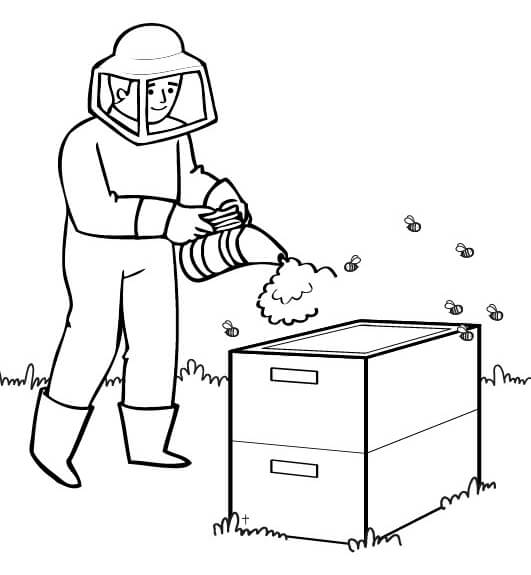
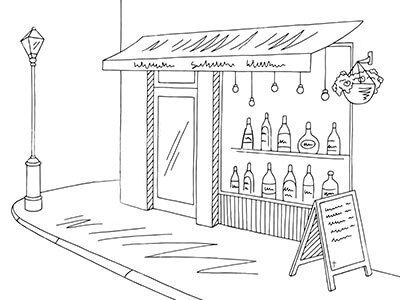
In summary, we have these different options shown in the table below.
Supermarkt |
Beekeeper |
Specialist shops |
Gourmet shops |
Online shops |
 |
 |
 |
|
|
| Many Imported honey | Good option | Best option | Good option | Good option |
Table 3: Different options for buying honey.
Also, we can buy raw honey in a large number of shops, but among all of them, we recommend buying in specialized shops. These stores advise and sell you always the best honey with a very good quality-price.

Photo 2: Laundry and poppy field in Guadalajara
If you’re a newbie to the world of high-quality honey,you may be wondering: Where can I get the best quality honey? In order to find a good honey, we’ll provide you with a list of questions and answers that you should take in account. In this way, you will gain more knowledge to know where to buy your honey.
In response to the first question, we will examine the views of different stakeholders and the reasons for the availability of high quality raw honey.
First, let’s look at the case of a small beekeeper. They will always take great care of their bees as their livelihood depends on them. Additionally, their honey will come from a single source and will not be mixed with other productions. Therefore, their honey will have unique floral aromas due to its local origin.
On the other hand, consider the case of a packer or large marketer. Initially, they require large productions. Consequently, they have to mix honey from different sources, resulting in a loss of genuine aromas. As a result, this inevitably leads to a decline in quality.
In addition, large-scale industrial production tends to focus on stable and homogeneous flavours, with an emphasis on price. As a result, quality is further reduced. This is the best case scenario; in the case of more industrial and lower quality honeys, we may encounter fraud. Product manipulation, which should not be allowed, is very common.
Likewise, if we look at traceability, a small beekeeper will know the origin of their honey perfectly. A unique origin that is not lost with the mixing of different honeys. For this reason, honey from small beekeepers is unique and has fruity flavors. These are the ones we most recommend.
In summary, if you want high-quality honey, you should buy from a trustworthy small or medium-sized beekeeper. In addition, specialised shops are a good point-of-sale to get it.
Next, we show you a video about the honey-making process.
Video 2: Honey production
Another factor that should make us think is the price. Can a quality honey have a low price? or, how can it be that the bulk price is more expensive than the retail and packaging price?
I like to compare it to buying a good car. Do you think that if you sell you a car at half its market price, you are making a good purchase. You should think the same thing when you buy your honey in purchase with a good raw honey.
Photo 3: Wild daisies
From a theoretical point of view, the traceability of each small and large company could be the same. However, in reality the traceability of a large company, at least for the end consumer, does not exist. The traceability of a small or medium beekeeper is easily known. Only one has to visit their facilities and see firsthand all their facilities and way of working. So we can know what we eat.
If a small beekeeper wants to make a living from the honey in his hives and decides to sell his entire production to a large area or a packaging plant, I don’t think his life will last long. The big surfaces by own experience and by acquaintances squeeze to the maximum, and if you want to work with them and to live of it, or low qualities or you do not cover neither costs. They should also sell large volumes and they would have no choice but to buy from other producers, mix them and low qualities. Therefore, if the beekeeper sells quality raw honey, it does not compensate him to sell it in a large area.
Video 3: Quality honey pot
When buying honey on the internet, we give you some advice when buying honey on the internet.
These are some of the tips you should take into account before you buy raw honey on internet.
The honey shop: Beekeepers, packers and producers of natural cosmetics. We currently sell their natural cosmetic products under the Castillo de Peñalver brand.
Madrid miel: They are producers and packers of honey in Madrid. They also sell on the internet.
Mieles honey: Physical and online shop that sells honey from different beekeepers in Spain. They also have a physical shop in Valencia.
Casa de la miel: Honey packers located in Madrid. Previously they were beekeepers, but as I understand it, they only pack and sell it in bulk. The origin of their honey is Spanish and not Spanish.
Rancho Cortesano: Beekeepers and honey bottlers in Cádiz. They sell on the internet and carry out many activities with their honey museum.
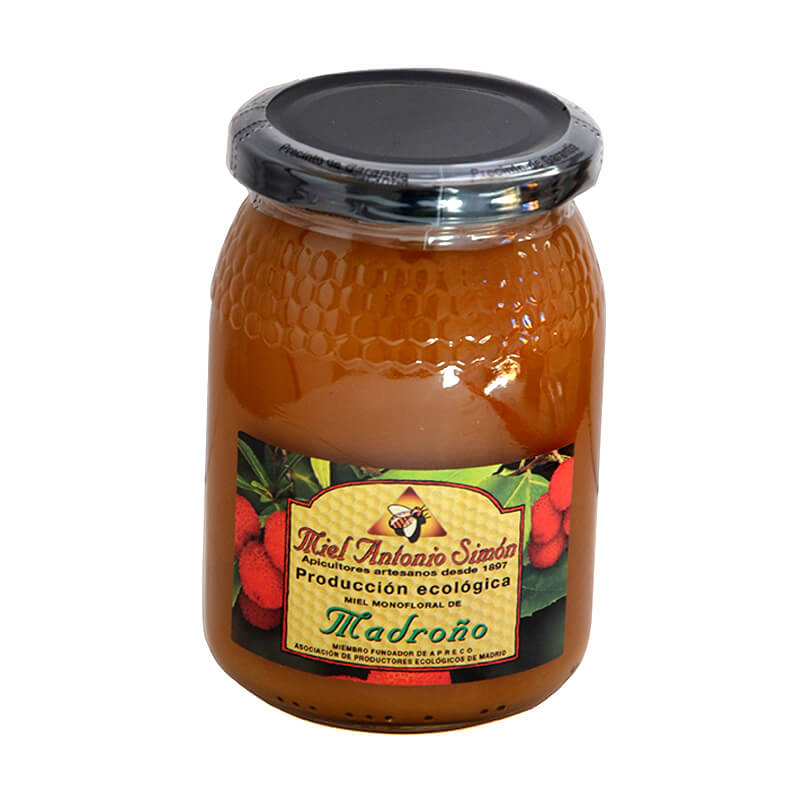
Photo 4: Jar of organic strawberry honey by Antonio Simón
Honey is one of the most manipulated foods that exist, along with milk and olive oil. The way to manipulate honey is very easy, and if the manipulation is well done, it is very difficult to find out.
The international regulations of the commercialization of the honey, determines that this product can be heated lightly to facilitate its packaging. It also allows it to be filtered to remove any foreign substance that the honey may contain. It may contain some bees residue or wax. However, under no circumstances may it be mixed with any additive or other substance.
Adulteration of honey may occur accidentally or intentionally. In this second case, it would be a fraud. Therefore, these intentional actions must be avoided. Acid adulteration may be due to poor storage conditions, high temperatures and poor hygienic conditions. This type of adulteration leads to an alteration of the properties, flavors and benefits of honey. Intentional adulteration has the purpose of removing and selling something cheaper, at a higher price.
The ways to alter honey intentionally are:
These alterations cause an alteration of the honey. As a result, honey loses its health benefits. In addition to the serious economic damage to all beekeepers who sell quality honey
Adulteration of honey occurs at various levels. It can be lightly adulterated by pasteurization, breaking down glucose crystals to keep it always liquid. It can also involve extreme manipulation, where other products completely unrelated to honey, such as rice syrups, corn, and other additives known only to those who adulterate honey, are added.
When buying these types of adulterated honey, whether it’s lightly or heavily adulterated, it’s better to just buy sugar. At least with white sugar, you know what you’re getting, unlike with adulterated honey. Adulterated honey shouldn’t even be called honey; it should have a different label. Additionally, these substitutes will not possess the beneficial properties of honey, as expected.
Both in the United States and the European Union, there have been years of complaints about products being sold in supermarkets labeled as honey when they are not. We also urge our government and the European Union to legislate clearly on what constitutes honey and what does not.
Fake honey, produced by industrial methods, exists for a very simple reason. Fake or adulterated honey is much cheaper, and it can be mixed with high-quality honeys to lower prices and increase profit margins.
While this doesn’t pose a health risk, it is certainly a fraud on the consumer’s wallet.
Honey is being given numerous descriptors such as raw, unfiltered, cooked, etc. All of this is leading to confusion among consumers. Truly, honey should only have one name without any additional descriptors. However, due to constant adulterations, beekeepers want to differentiate their honey from those sold in markets which have much lower quality.
Consequently, the concept of unfiltered honey is quite ambiguous. Honey must undergo some form of purification process; otherwise, we might find pieces of wax or even bee remnants. In summary, honey needs some form of filtering and decanting to remove impurities. However, adulteration is a separate issue; in that case, adulterated honeys should have a different name.
The most common honey fraud involves mixing low-quality honeys or substitutes and selling the result as bee honey. In the case of these honey substitutes, they are made up of corn syrup or honeydew. Therefore, these products may also be natural but they do not possess the properties of high-quality raw honey. In summary, it’s a fraud on the consumer’s wallet, where the customer ends up with a different product than what they believe they are buying.

Phote 5: Bee quote
The most efficient current methods to detect honey adulteration are the following:
The way to detect adulteration of honey, s analyzing the origin of fructose and glucose in honey. The two major components of honey. This can be analyzed by liquid chromatography (HPLC).
The sweetening in these cases consists in throwing glucose and fructose syrups of another honey into the honey. Mix it with a national honey or directly, or directly sell the syrup as a honey. Therefore, this is a clear fraud to the consumer.
Honey from China or other Asian countries can be mixed with rice syrup, beet and sugar. On the Internet it is said that with homemade methods, it is easy to detect its falsity. Methods such as genetic memory or the bubble. If the manipulation is very coarse, anyone can detect it, just savouring it. However, the only way to find out for sure is through refractometry, a very expensive method that hardly anyone else does.
The nuclear magnetic resonance (NMR) method is gaining increasing prominence. This method utilizes the mechanical-quantum properties of the atomic nuclei in honey to detect adulterated honeys.
This technique can provide a complete image of the intrinsic composition of the product and can detect counterfeits. Since the composition of each honey has a unique chemical basis, depending on the quantity of specific components and their combinations, each honey has a unique and distinctive organoleptic character. Consequently, it offers the possibility to control quality and botanical origin.
Currently, this is the most effective method for detecting honey counterfeits.
The most important parameters to evaluate if the honey is of quality, are the following:
The indication of the origin of the honeys gives us very important clues to the quality of the honey. Let’s analyse some of them.
This writing when I see it on the labels of the honeys they sell makes me think clearly that what is sold here is not honey, but a substitute. Therefore, if we want to buy quality raw honey, this label tells us that it is not.
One of the questions I ask myself is why does the product want to mask the origin of the honey? Very possibly, because it comes from places with a great fraudulent reputation.
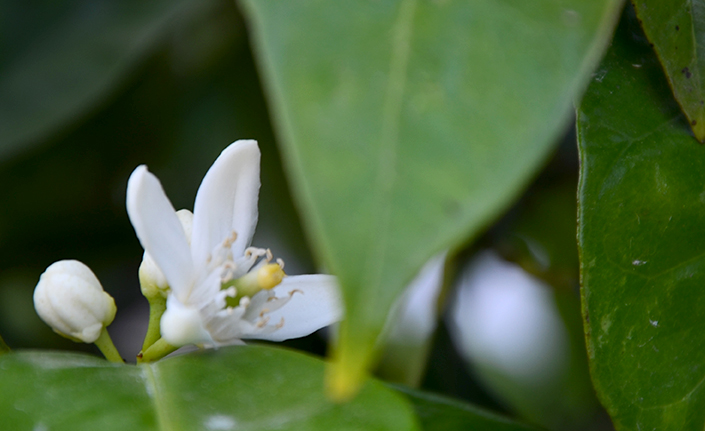
Photo 6: Melliferous flower, orange blossom
In these large surfaces you also the oportunity to buy raw honey, but in most cases they are pasteurised and adulterated. In some cases, additives are even added. This is especially true if we find that the honeys are sold at ridiculously low prices. They also sell some quality honey, but as a rule their prices are usually very high.
Moreover, when you buy honey in large stores, you do not get any advice or information. In short, buying from a specialist shop ensures you get quality and know what you are buying.
The rest of Europe is also a producer of honey. Honeys in great demand such as acacia and linden, which are produced in Romania and Croatia. Also, in France, Germany, England and the rest of the countries we produce honeys with a different flora that we would like to bring to our shop little by little.
There are some honeys abroad that are world famous. One of them is the Manuka honey produced in Australia and New Zealand. According to their research, it is the healthiest honey in the world.
Another of the honeys in high demand are the honeys of the honey bee, but very difficult to produce due to their small production and lack of controls.
Finally, the honey with hallucinogenic effect, which would be forbidden to be imported.
Photo: Gift basket with a selection of honeys from Spain
Honey handling is a very important issue for beekeepers, retailers and consumers. Public administrations, both food and health, should control the origin and quality. What we have today in many markets is a consumer fraud. Because they are selling something, which is not what the label says.
For this reason, the demand for quality raw and Spanish honey is increasing. People want to buy raw honey because of its health benefits, and they do not want a fraudulent honey that does not provide them.
Also, to avoid fraud and to buy real honey, the only solution left is to always buy raw honey from small beekeepers. Or buy it from specialist honey shops. Besides, we must be well informed to whom we buy it, so that we are not deceived.
Therefore, in our shop in Las Rozas de Madrid you have a fantastic selection of real raw honeys, whe you can buy raw honey.
Javier García, owner of Cortijuelo San BenitoJavier has a degree in Agricultural Engineering from the Polytechnic University of Madrid and speaks 4 languages and has taken many courses on engineering. His native language is Spanish, and the other three languages are English, German and Russian. Knowing the importance of food and wanting to give greater value to Spanish products such as extra virgin olive oil and honey, I created this online and local store located in Las Rozas de Madrid. In addition to advising and writing in this blog, we do tastings and talks to raise awareness of the importance of good nutrition for our health. |
Sources:
The health line Raw Honey against regular honey
Iniciación a la apicultura de Robles Portera Ana María
Las abejas: modo de criarlas y de beneficiar sus productos.
Tips to buy raw honey